 LangChain

-
The problem
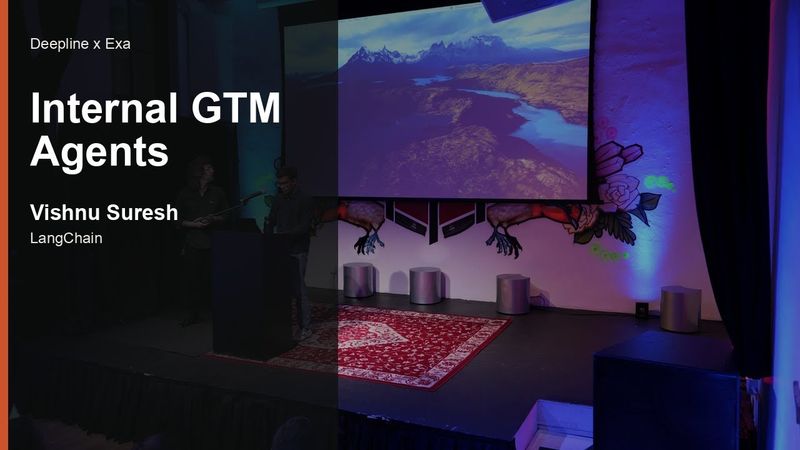
Once LangChain's GTM agent became a Slack chatbot, people across sales, product and engineering started asking it questions like "which of our customers are on Azure?" or "what LLM provider does this customer use?" The answers weren't in the CRM or the data warehouse, so the agent couldn't answer them well.
-
What they built
A nightly job that reads every customer call transcript and pulls out about 50 fields the team agreed on: whether the customer is building agents for internal or external use, which cloud they build on, who the champions and stakeholders are, and security needs like self-hosting or data residency. A weekly job tracks how each customer's answers change over time, so the agent can explain what has happened with a customer, for example one at risk of churning.
-
So what
What customers say on calls stops living only in recordings and reps' heads. Anyone can ask which accounts share a requirement, or what changed with a customer lately.
Under the hood
For GTM engineers
Call recordings are transcribed and land in BigQuery. A nightly cron runs each new transcript through an LLM extraction pipeline for about 50 signals and stores the results in BigQuery. A job compares extractions week over week to build a per-customer state or contact graph over time. The agent, available as a Slack chatbot and used by one rep as an MCP from Claude Code, answers questions by writing SQL against the warehouse, which Vishnu found worked better than going through APIs.
More examples
Other systems GTM engineers have built, or see all of them.
-
 Default
Every account is scored on fit and timing each month, so reps know which accounts to call now and which get automated emails
 Nandika Jhunjhunwala · Founding Growth Engineer
-
 Ordo
School-lunch contract bids that took five people working late now run with two people, and more bids went out this year
 Hunter Rosenblume · CEO & Co-Founder
-
 Profound
AI agents check the company's Google Ads on a schedule and send suggested changes to Slack, where a person approves them
 Nick Lafferty · Founding Marketing Engineer
Hiring someone who can build like Vishnu?
We search for GTM engineers who have shipped systems like this one, and Joe speaks to every candidate before you do.